
Derma PRP vs. Fillers Under Eyes: How It Works, Benefits, and Cost
DermaPRP combines PRP with a gel matrix to deliver immediate under-eye volume plus long-term collagen production, with less risk than fillers.
When it comes to addressing concerns in the under-eye area such as dark circles, fine lines, hollows, and volume loss, both platelet-rich plasma (PRP) and dermal fillers have been popular solutions. However, there's an emerging treatment that blends the best of both worlds: DermaPRP. This innovative approach uses PRP with a gel matrix to provide immediate results, while still harnessing the long-term rejuvenating benefits of collagen production. In this article, Dr. Leslie Apgar of Pura Vida Med Spa discusses how DermaPRP is transforming the way we treat under-eye concerns.
What is DermaPRP?
DermaPRP is a combination of gel filler and platelet-rich plasma (PRP), which is derived from the patient's own blood. Unlike traditional PRP treatments, which may take time to show visible results, DermaPRP provides both immediate volumizing effects and ongoing skin rejuvenation. This treatment is particularly effective for the under-eye area, where patients often experience hollows, dark circles, and fine lines.
The PRP used in DermaPRP is processed through a centrifuge to concentrate the growth factors and other essential proteins that promote healing and skin rejuvenation. What makes DermaPRP stand out is that it undergoes a unique heating and cooling process, transforming the PRP into a gel-like matrix. This allows it to function similarly to dermal fillers, providing immediate volume while also supporting long-term collagen and elastin production.
Dr. Leslie Apgar, a specialist in aesthetics and rejuvenation, shares, "What I love about DermaPRP specifically is that you get a lot of material to work with from one blood draw. You do one tube of blood and I get 6ccs of this DermaPRP material to work with."
This abundance of DermaPRP means that, with just a single treatment, she can address multiple areas of concern beyond just the under-eye area. For example, with 6ccs of DermaPRP, Dr. Apgar can target nasolabial folds, fine lines around the mouth, cheek volume, or even areas of acne scarring. This allows for a more comprehensive facial rejuvenation approach, making DermaPRP not only effective for tear troughs but also ideal for general facial rejuvenation.
How Does DermaPRP Work?
The DermaPRP process begins with a simple blood draw. Once the patient's own blood is collected, it's placed in a centrifuge to separate the platelet-rich plasma from the other components. After the PRP is isolated, it is processed using a heating and cooling technique, creating a gel-like substance that can be injected into areas needing volume and rejuvenation, such as the tear troughs under the eyes.
This gel-like form of PRP allows for immediate correction in areas where volume loss has occurred, making it an ideal treatment for under-eye hollows. The treatment not only addresses immediate concerns like dark circles and fine lines but also works over time by stimulating the production of new collagen, elastin, and blood vessels. This leads to ongoing improvements in skin texture, elasticity, and overall skin quality.
Dr. Apgar adds, "Unlike straight PRP, which has the consistency of water, DermaPRP provides immediate gratification. You'll get some thickening over time, but with DermaPRP, it's like, 'I have a problem, and now I don't.'"
Benefits of DermaPRP for Under-Eye Rejuvenation
The benefits of DermaPRP are significant, especially when compared to other treatments like traditional PRP injections or under-eye fillers. Here are some of the key advantages:
- Immediate Volume: DermaPRP provides instant results, addressing hollows in the under-eye area right after the procedure.
- Natural Rejuvenation: Since it uses the patient's own blood, DermaPRP naturally enhances the skin's ability to produce collagen and elastin, improving skin texture and reducing discoloration.
- Long-Term Results: While traditional fillers can provide immediate volume, DermaPRP promotes long-lasting rejuvenation by stimulating new collagen and blood vessel production over time.
- Minimal Risk of Allergic Reactions: Because the treatment uses PRP derived from the patient's own blood, there's minimal risk of allergic reactions or side effects.
- Improved Skin Quality: Beyond volumizing the under-eye area, DermaPRP helps improve overall skin health, addressing issues like hyperpigmentation, fine lines, and under-eye bags.
- Less Puffiness: Dr. Apgar notes, "Patients are usually less puffy because it's not anything foreign; there's no foreign antigen."
DermaPRP vs. Fillers for Under-Eye Rejuvenation
Patients often wonder whether to choose a PRP under-eye treatment or traditional under-eye filler treatments, such as those using hyaluronic acid. Both options have their benefits, but DermaPRP offers several distinct advantages.
| Factor | DermaPRP | Traditional Fillers |
|---|---|---|
| Results timing | Immediate improvement plus long-term results by stimulating collagen production and skin regeneration | Instant volume (e.g., hyaluronic acid) |
| Natural vs. synthetic | Uses the patient's own blood; more natural and safer | Synthetic substances that can sometimes migrate or cause complications in the delicate under-eye area |
| Longevity | Typically lasts 6 to 10 months after two treatments spaced six weeks apart | 6-12 months depending on brand; requires ongoing maintenance |
| Potential side effects | Avoids the Tyndall effect; uses natural components from your own body | Risk of complications like the Tyndall effect (a bluish tint under the eyes) |
| Healing process | Similar to fillers but less risk of puffiness or allergic reactions; mild swelling or bruising resolving in a few days | Mild swelling or bruising |
Who is an Ideal Candidate for DermaPRP?
DermaPRP is ideal for patients who want to address under-eye hollows, fine lines, discoloration, and dark circles but are hesitant to use traditional fillers. The treatment is particularly beneficial for those with concerns about filler migration or long-term risks.
Dr. Apgar says, "The perfect candidate is someone who wants under-eye filler but is nervous about traditional fillers. There's just virtually no risk with this."
Related: What are exosomes? | Juvederm alternatives | How to fix droopy eyelids
The American Academy of Dermatology recommends consulting a board-certified provider before any injectable treatment.
The DermaPRP Procedure: What to Expect
A typical DermaPRP session at Pura Vida Med Spa begins with a thorough consultation, where Dr. Apgar and her team assess the patient's needs and desired outcomes. After the consultation, a small blood draw is taken from the patient, and the platelet-rich plasma is separated in a centrifuge. This PRP is then processed into a gel matrix using the special heating and cooling technique.
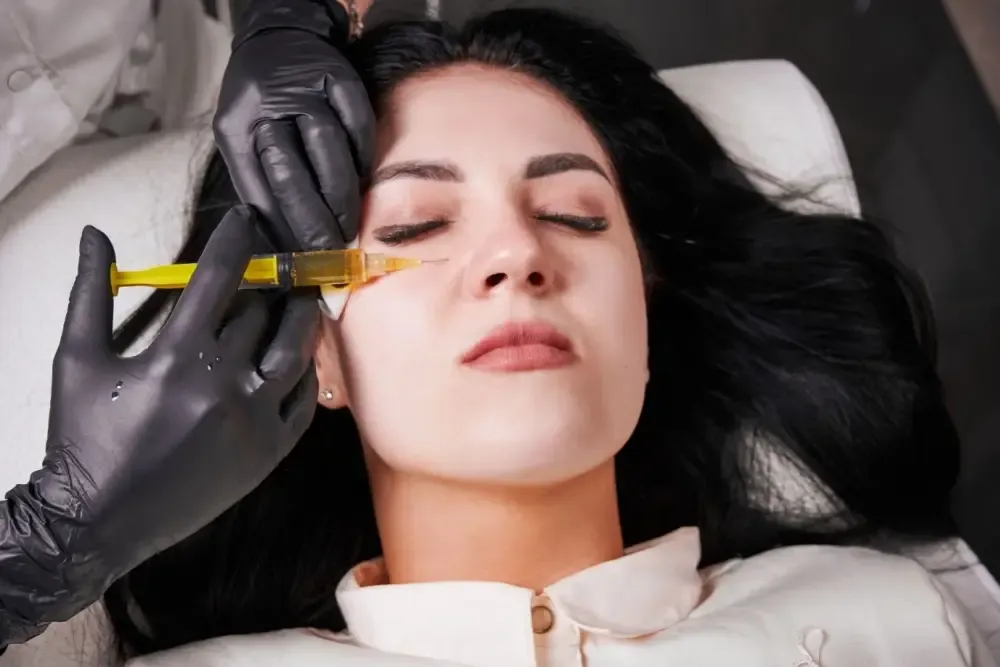
The PRP under-eye injections are administered using a fine cannula or syringe to ensure precise placement and minimal discomfort. The entire procedure typically lasts 45 minutes to an hour, and patients can usually return to their regular activities right after, with minimal downtime.
Results and Longevity
Most patients notice an immediate improvement in the under-eye area due to the volumizing effect of the PRP gel. Over the following weeks, collagen and elastin production increases, providing further improvements in skin texture, elasticity, and overall appearance. Patients usually undergo two treatments spaced six weeks apart to achieve optimal results.
Takeaway
DermaPRP offers a safe, effective, and natural-looking solution for those looking to rejuvenate the under-eye area without the risks associated with traditional filler treatments. By combining the immediate benefits of volume correction with the long-term advantages of collagen and elastin production, DermaPRP represents the future of non-surgical rejuvenation.
If you're interested in learning more about how DermaPRP can help you achieve a youthful, refreshed appearance, contact Pura Vida Med Spa today to schedule your consultation with Dr. Leslie Apgar.