
How Long Does Sculptra Last and How Is It Different from Regular Fillers?
Sculptra is a collagen stimulator, not a traditional filler. Results build gradually over 3 to 6 months and typically last 2 or more years. Here is how it compares to regular hyaluronic acid fillers and how to know which is right for you.
If you have ever sat in a consultation chair and listened to your provider walk through filler options, you have probably noticed that one product keeps getting described differently than the rest. [Sculptra](/injectables/dermal-fillers/sculptra) is not just another filler. It is a collagen stimulator, which means it works with your body to rebuild structural support over time instead of simply filling a hollow in a single visit. That difference changes everything about how it feels, how it looks, how often you treat, and how long the results last.
At Pura Vida Med Spa in Fulton, Maryland, we get questions about Sculptra almost every week. Patients want to know how long results last, whether it is worth the wait, and how it compares to Dermal Fillers at Pura Vida Med Spa like Restylane or Juvederm. This guide answers all of those questions in detail so you can walk into your consultation knowing exactly what you are choosing between.
What Is Sculptra?
Sculptra is an injectable made from poly-L-lactic acid, often shortened to PLLA. It was first approved by the FDA in 2004 for the correction of facial volume loss in patients with HIV, and in 2009 it received expanded approval for general aesthetic use to correct deep lines, wrinkles, and facial hollowing. PLLA has been used in medicine for decades in absorbable sutures and orthopedic implants, so the material itself has a long safety track record.
Here is the part that makes Sculptra different from every other injectable in the treatment room. Traditional hyaluronic acid fillers are gels. When your provider injects them, the gel itself takes up space under your skin and you see the result immediately. Sculptra is not a gel. It is a suspension of tiny PLLA microparticles in a sterile water solution. Once injected, the water is absorbed within a few days and the PLLA particles remain in the tissue. Over the following weeks and months, your body slowly metabolizes those particles and, as it does, your fibroblasts respond by producing new type I collagen in the same area.
That new collagen is what creates the lift, firmness, and improvement in skin quality. You are not seeing a filler. You are seeing your own collagen, rebuilt gradually over three to six months. That is why providers often describe Sculptra as a biostimulator rather than a filler.
How Long Does Sculptra Last?
For most patients, Sculptra results last two years or longer. Some clinical studies have documented measurable improvement at 25 months, and many patients report that they still look refreshed three years after their final treatment session. The longevity comes from the fact that Sculptra stimulates your own collagen, and that collagen behaves like any other collagen in your body. It supports your face structurally and breaks down very slowly over time.
Compare that to most hyaluronic acid fillers, which typically last anywhere from 6 months to 18 months depending on the product, the area treated, and how quickly your body metabolizes hyaluronic acid. Thicker fillers placed in lower-movement areas like the deep cheek can last closer to a year and a half. Lip filler and tear trough filler often need a refresh closer to 9 months.
One important caveat. Sculptra is not a one-and-done treatment. To build enough collagen for a visible, lasting result, most patients need a series of two to three sessions spaced about four to six weeks apart. Think of each session as adding a layer of foundation. Your provider injects, your body builds collagen for several weeks, and then you come back for the next layer. After the final session, the full result becomes visible around the three to six month mark and then holds for two or more years.
Sculptra vs Regular Fillers: A Direct Comparison
Here is how the two categories stack up against each other side by side.
Mechanism of Action
Regular fillers are gels made from hyaluronic acid, calcium hydroxylapatite, or other materials that physically occupy space under the skin. You see volume immediately because the gel itself is the volume. Sculptra triggers your own collagen production. The volume you see at 6 months is not the product. It is new tissue your body built in response to the PLLA particles.
Results Timeline
With RHA filler for immediate volume or any other hyaluronic acid product, you see the result the moment the syringe is empty. Some swelling settles over the first week, but the shape is right there in the mirror that day. With Sculptra, you may see a brief plumping effect for the first day or two from the injection water, but it disappears. The real result builds slowly over the next three to six months as collagen forms.
Duration
Hyaluronic acid fillers last 6 to 18 months. Sculptra lasts 2 or more years. If you are calculating cost over multiple years, Sculptra often comes out comparable or favorable, because you are not refreshing every year.
Treatment Areas
Sculptra is best suited for broad areas of volume loss, such as the temples, cheeks, jawline, and lower face. It is also used off-label for the chest, neck, and buttocks to improve skin quality and add subtle volume. Hyaluronic acid fillers excel at precise, defined work like lip enhancement, tear troughs, chin contouring, and the nasolabial folds. For very fine detail, a product like Restylane for precise volume and contour is usually the better choice over Sculptra.
Reversibility
Hyaluronic acid fillers can be dissolved with an enzyme called hyaluronidase if you do not love the result. Sculptra cannot be reversed. Once it stimulates collagen, that collagen is part of your tissue. This is why Sculptra requires conservative dosing and an experienced injector who builds results gradually.
Best Candidate
Sculptra is ideal for patients in their late 30s and beyond who are noticing overall facial deflation, flatter cheeks, hollow temples, and softer jawline definition rather than one specific line or fold. Hyaluronic acid fillers are ideal when you have a defined target like thinner lips, a specific wrinkle, or under eye hollowing.
Can I Combine Sculptra With Other Fillers?
Yes, and many patients do. Sculptra and hyaluronic acid fillers complement each other beautifully because they do different jobs. A common combination protocol is to use Sculptra to rebuild the underlying structural foundation of the face, including the temples, lateral cheeks, and jawline, and then use a hyaluronic acid filler for any finishing details like the lips, tear troughs, or nasolabial folds.
You can combine them in the same overall treatment plan but typically not in the exact same session. Most injectors prefer to treat with Sculptra first, let some collagen develop over a few weeks or months, and then come back and add hyaluronic acid filler where additional definition is needed. By that time, your provider can see how much your face has already lifted from the collagen response and can place filler much more precisely.
Sculptra also pairs well with toxins like Botox or Dysport and energy-based skin treatments like radiofrequency microneedling.
What to Expect at a Sculptra Appointment
A Sculptra session at Pura Vida is straightforward and usually takes 45 minutes to an hour. Here is what the visit looks like.
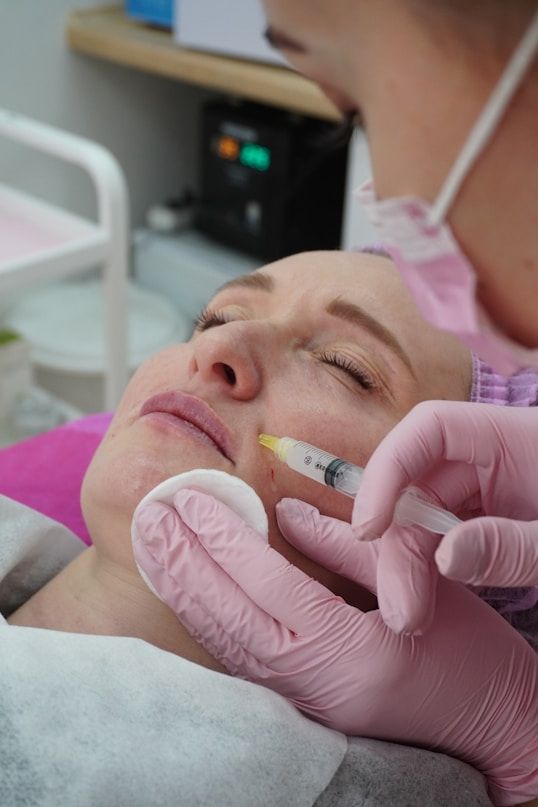
Your provider will start with a detailed consultation, mapping out the areas of volume loss and discussing how much product is appropriate for your first session. Most patients receive one to two vials per session, depending on the depth of volume loss. After consent and photographs, the treatment area is cleansed and a topical numbing cream is applied for 15 to 20 minutes. Sculptra itself also contains lidocaine in the reconstitution fluid, so the injections are well tolerated.
Your provider injects with either a fine needle or a cannula, depending on the area. Cannula technique is common for the cheeks and temples because it covers more area with fewer entry points and reduces bruising. After the injections, your provider will massage the treated areas thoroughly. You will be asked to do the same at home, five times per day for five days, for five minutes each time. This helps the PLLA particles distribute evenly and prevents the very rare risk of small nodules forming.
You can return to most normal activities the same day. Avoid strenuous exercise, saunas, and direct sun for 24 to 48 hours. Mild redness or pinpoint bruising typically resolves within a few days. A follow-up session is scheduled four to six weeks later, with a third if needed.
Frequently Asked Questions
How long does Sculptra last?
For most patients, Sculptra results last two years or longer. Some patients still see improvement at three years out. Because Sculptra works by stimulating your own collagen, results fade gradually as that collagen naturally breaks down rather than disappearing all at once like a traditional filler.
What is Sculptra?
Sculptra is an FDA-approved injectable made from poly-L-lactic acid, a biocompatible material that stimulates your body to produce new collagen. It is classified as a biostimulator rather than a filler. It treats overall facial volume loss, deep lines, and skin laxity gradually over three to six months.
Sculptra vs fillers: what is the difference?
The biggest difference is mechanism. Regular hyaluronic acid fillers are gels that occupy space under the skin and create immediate volume. Sculptra is a collagen stimulator that triggers your own body to build new tissue over months. Sculptra lasts longer, typically two or more years versus 6 to 18 months for hyaluronic acid filler. Fillers are better for precise contouring, while Sculptra is better for restoring broad facial volume.
How many sessions of Sculptra do I need?
Most patients need two to three sessions, spaced four to six weeks apart. Patients with more significant volume loss may need three to four. Your provider will recommend a session plan during your consultation based on the depth of volume loss and your goals.
When will I see results from Sculptra?
You may notice a brief plumping effect for the first 24 to 48 hours from the injection water, but this fades. The real results from new collagen production begin appearing around six to eight weeks after your first session and continue to build through three to six months. Your final result is visible about three to six months after your last session.
Does Sculptra hurt?
Most patients report mild discomfort, similar to other injectables. A topical numbing cream is applied before treatment and the Sculptra solution itself contains lidocaine, which numbs the tissue as it is injected. Using a cannula instead of a needle for larger areas also reduces sensation.
Who is a good candidate for Sculptra?
Sculptra is ideal for adults in their late 30s and beyond who are noticing generalized facial volume loss, flatter cheeks, hollow temples, softening of the jawline, or thinning skin. It is not recommended for patients who are pregnant or breastfeeding, who have active skin infections at the injection site, or who have a known allergy to any of the ingredients. Patients looking for very precise lip or tear trough enhancement are usually better candidates for a hyaluronic acid filler.
Can Sculptra be reversed?
No, Sculptra cannot be reversed. Unlike hyaluronic acid fillers, which can be dissolved with hyaluronidase, the collagen that Sculptra stimulates is your own tissue. This is why we treat conservatively, build results in stages, and only work with experienced injectors who understand facial anatomy and how to layer Sculptra appropriately.
Book Your Sculptra Consultation at Pura Vida
If you are noticing overall facial deflation rather than one specific line or fold, and you want a result that lasts years instead of months, Sculptra is worth a conversation. Our team at Pura Vida Med Spa offers sculptra injections in Fulton and Marriottsville, MD, and we will walk you through a full consultation, map out a session plan, and answer every question you have. Whether Sculptra ends up being the right tool for you or whether a hyaluronic acid filler is a better fit, you will leave the consultation knowing exactly what to expect. Schedule your visit today.
Related reading: Juvederm alternatives | Derma PRP vs fillers | Combination therapies
The American Academy of Dermatology provides authoritative guidance on this topic.