

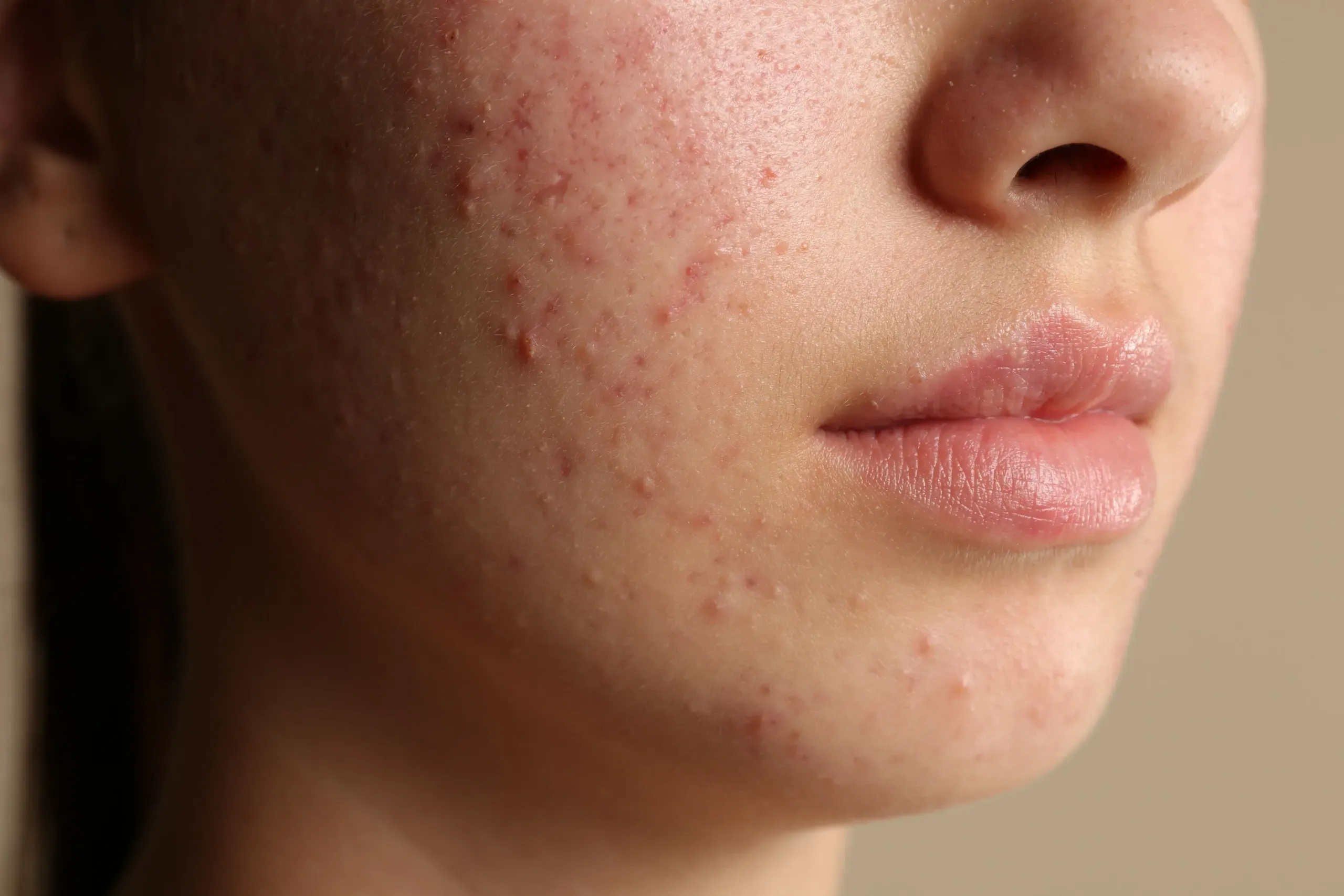

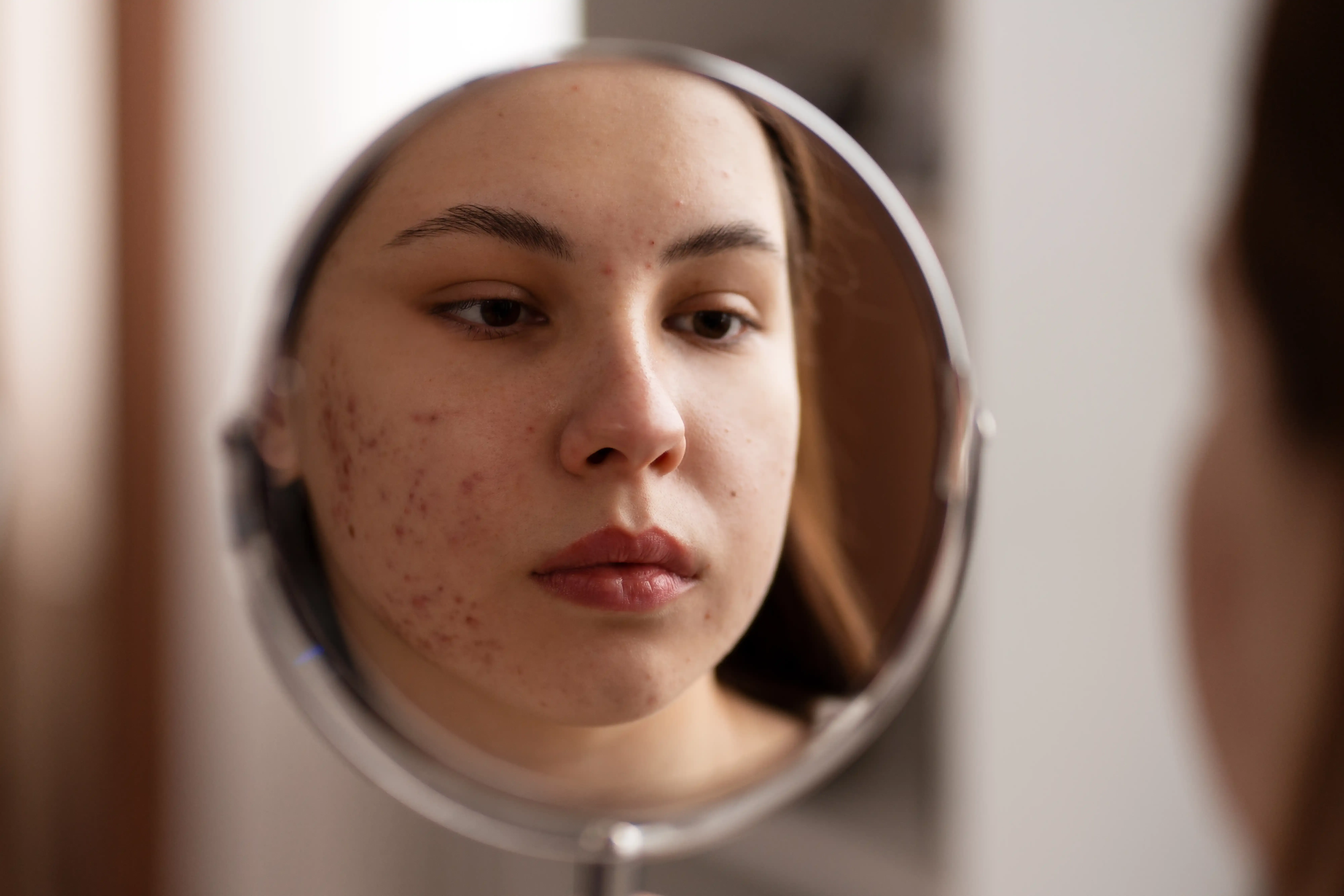
Acne scars form when the inflammatory cascade from a breakout penetrates deep enough to damage the dermal collagen and elastin matrix. When the skin attempts to repair this damage, it often produces either too little or too much new collagen, and the result is a permanent depression or raised area at the surface. The National Institutes of Health notes that the severity and duration of inflammation are the strongest predictors of long-term scarring.
Atrophic scars, which include ice pick, boxcar, and rolling types, develop when collagen production falls short during healing, leaving a sunken contour. Hypertrophic scars form when the wound-healing response overshoots and excess fibrous tissue builds up above the original skin level. Post-inflammatory hyperpigmentation, while not a textural scar, represents an overproduction of melanin at the site of past inflammation and is especially common in medium to deep skin tones.
Picking, popping, or aggressively scrubbing active acne lesions significantly worsens the depth of dermal injury and increases your risk of permanent scarring. Genetics, hormonal patterns, and untreated cystic acne all amplify the likelihood that breakouts will leave lasting marks behind.