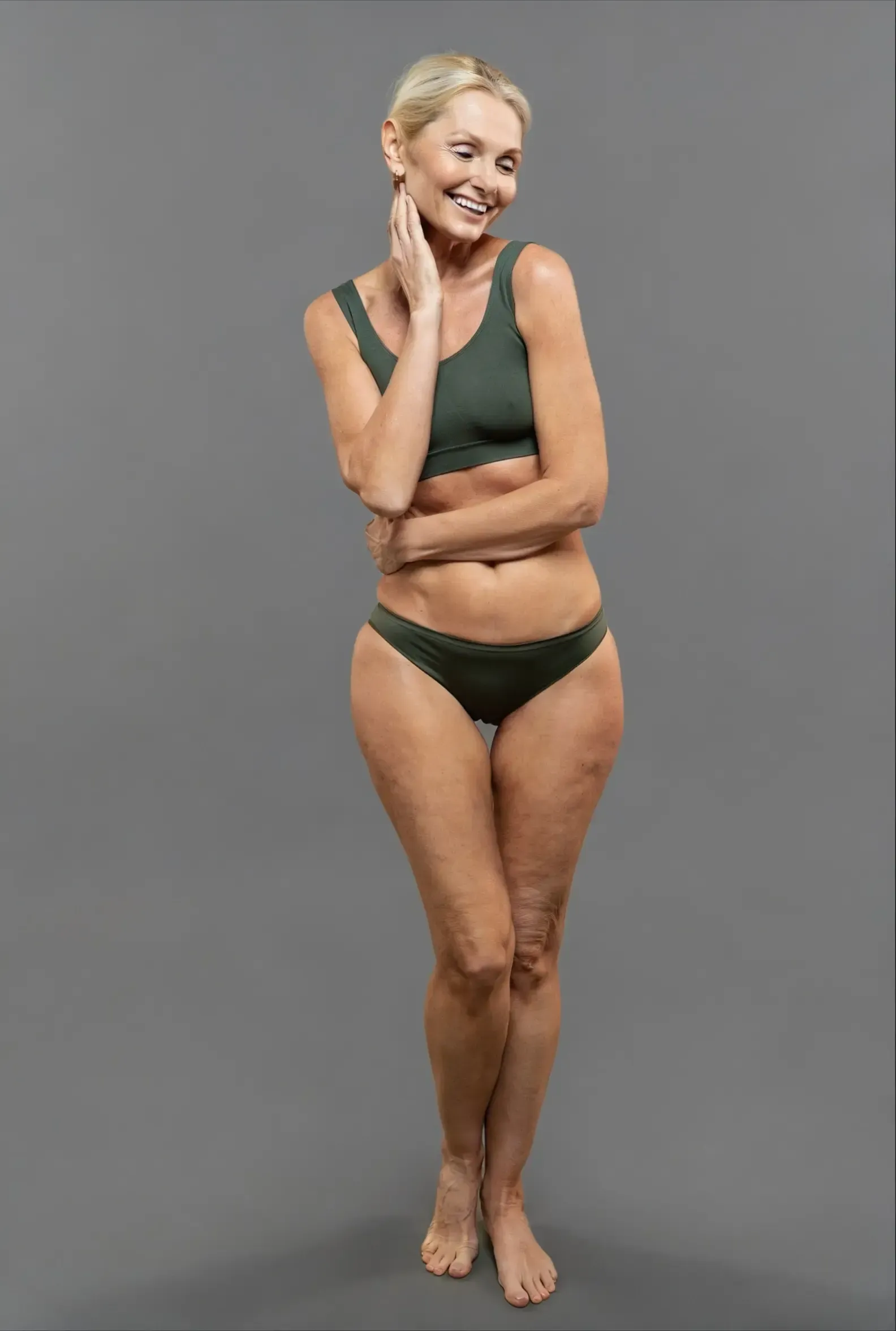




Cellulite forms when subcutaneous fat pushes upward against the skin while fibrous connective bands, called septae, pull downward. This tug-of-war creates the characteristic dimpled surface. The pattern is far more visible in women because of differences in skin architecture, fat distribution, and hormonal influence.
Contributing factors include estrogen-driven fat storage in the hips and thighs, age-related thinning of the dermis, reduced microcirculation, and genetic predisposition. Weight gain can accentuate the appearance, but lean and athletic women can develop Cellulite as well. Research published through the National Center for Biotechnology Information consistently identifies septal anatomy and hormonal influence as the central drivers.