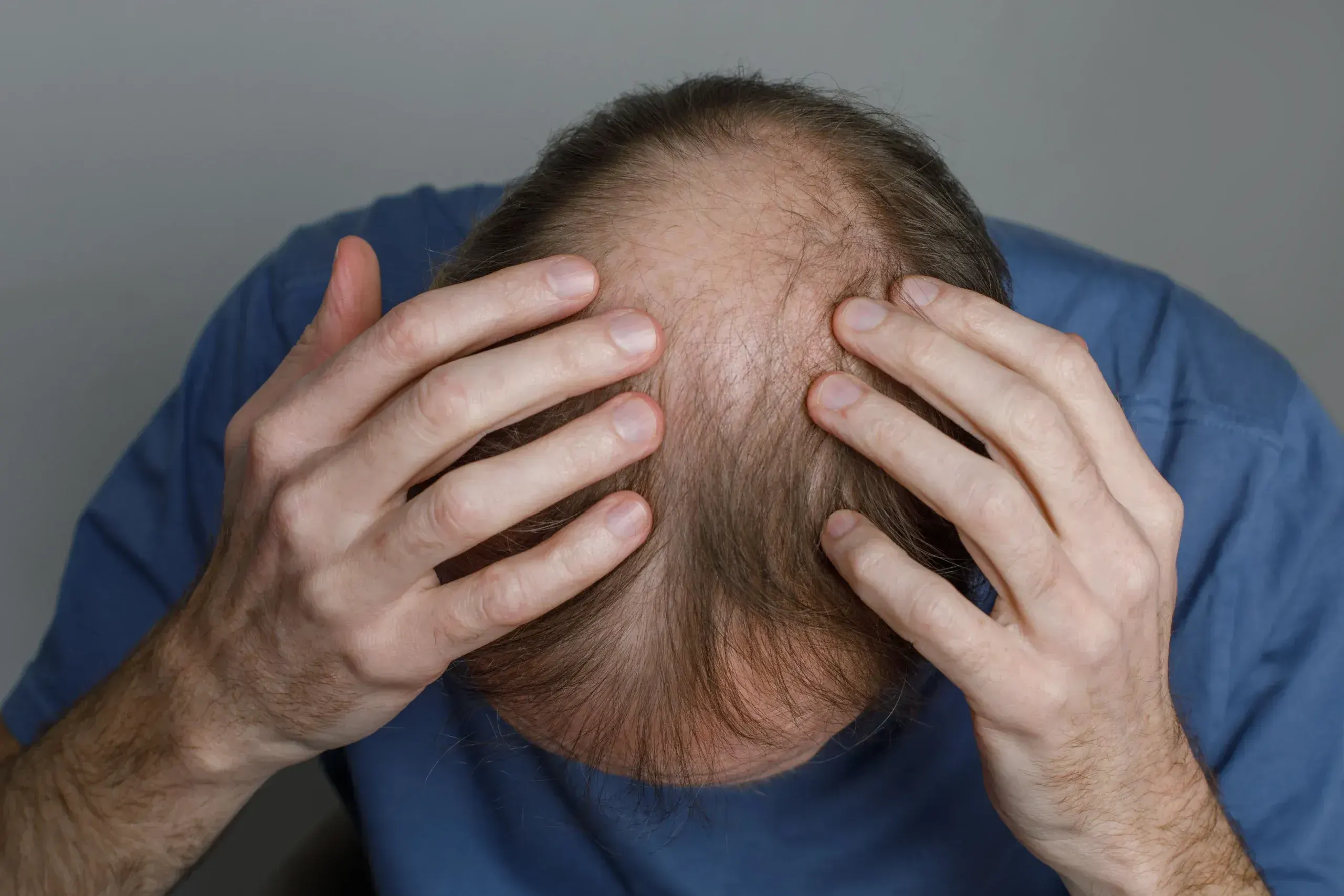

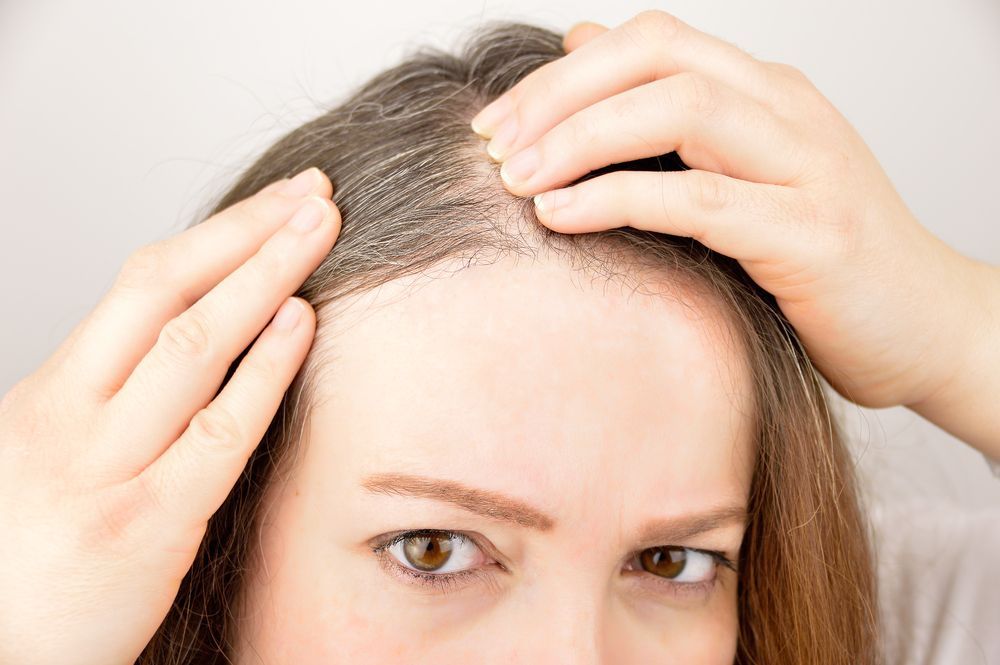

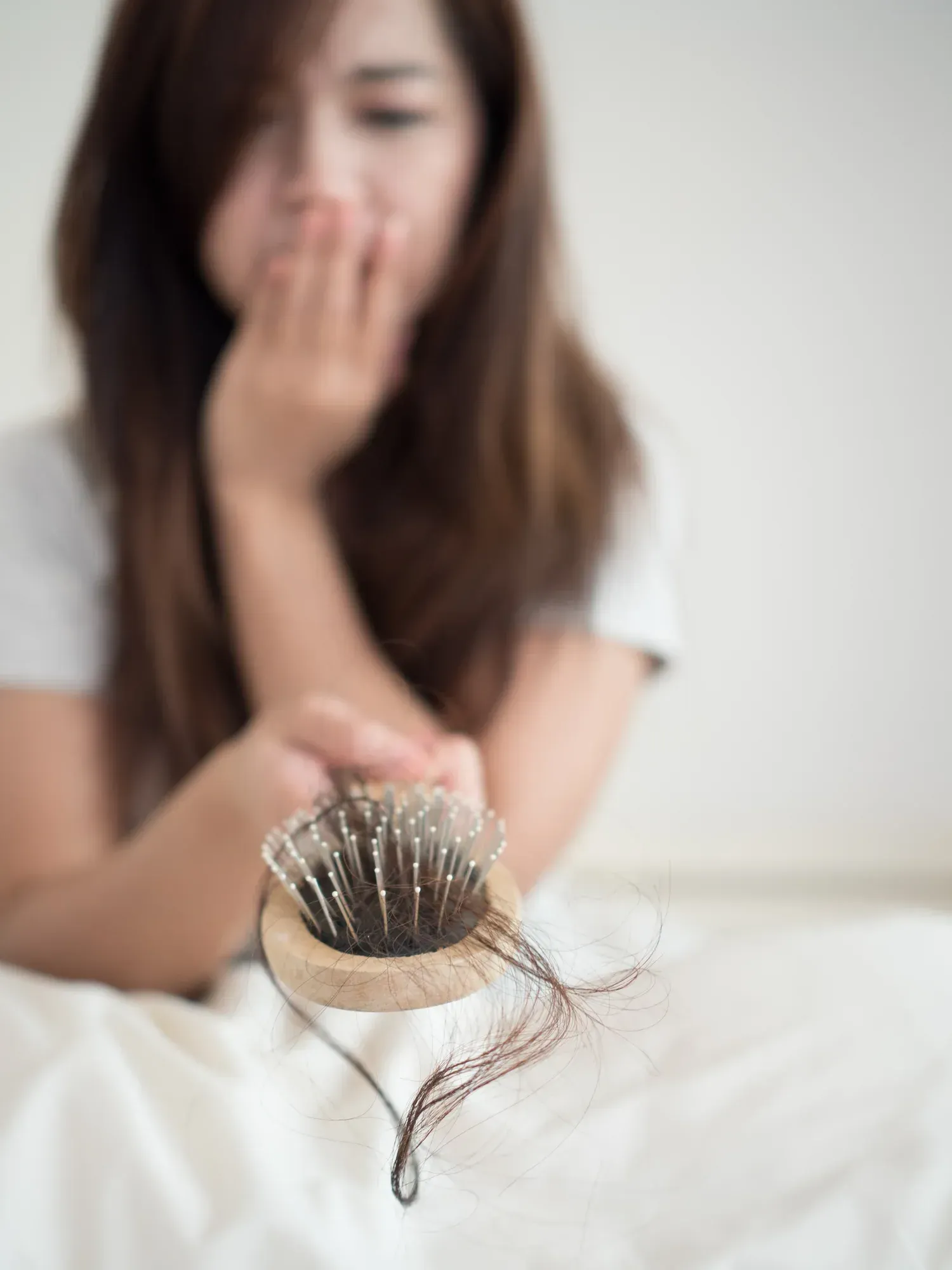
Androgenetic alopecia, often called male or female pattern hair loss, is the most common driver and tends to follow family history. In women, it usually shows up as diffuse thinning across the crown and a widening part. In men, it more often appears at the temples and crown. According to the National Institute of Arthritis and Musculoskeletal and Skin Diseases (NIAMS), pattern hair loss affects roughly half of adults by age 50.
Telogen effluvium is a temporary but often dramatic shedding triggered by a physical or emotional stressor: childbirth, illness, surgery, rapid weight loss, or a major life event. Shedding usually peaks 2 to 4 months after the trigger. Postpartum shedding falls in this category and is one of the most common reasons new mothers seek care. Alopecia areata is an autoimmune cause, where the immune system targets follicles and produces round, smooth bald patches. Hormonal shifts (thyroid disease, perimenopause, PCOS, low ferritin) and chronic scalp inflammation from seborrheic dermatitis or product buildup also play a role and often respond well to a structured scalp health plan.