
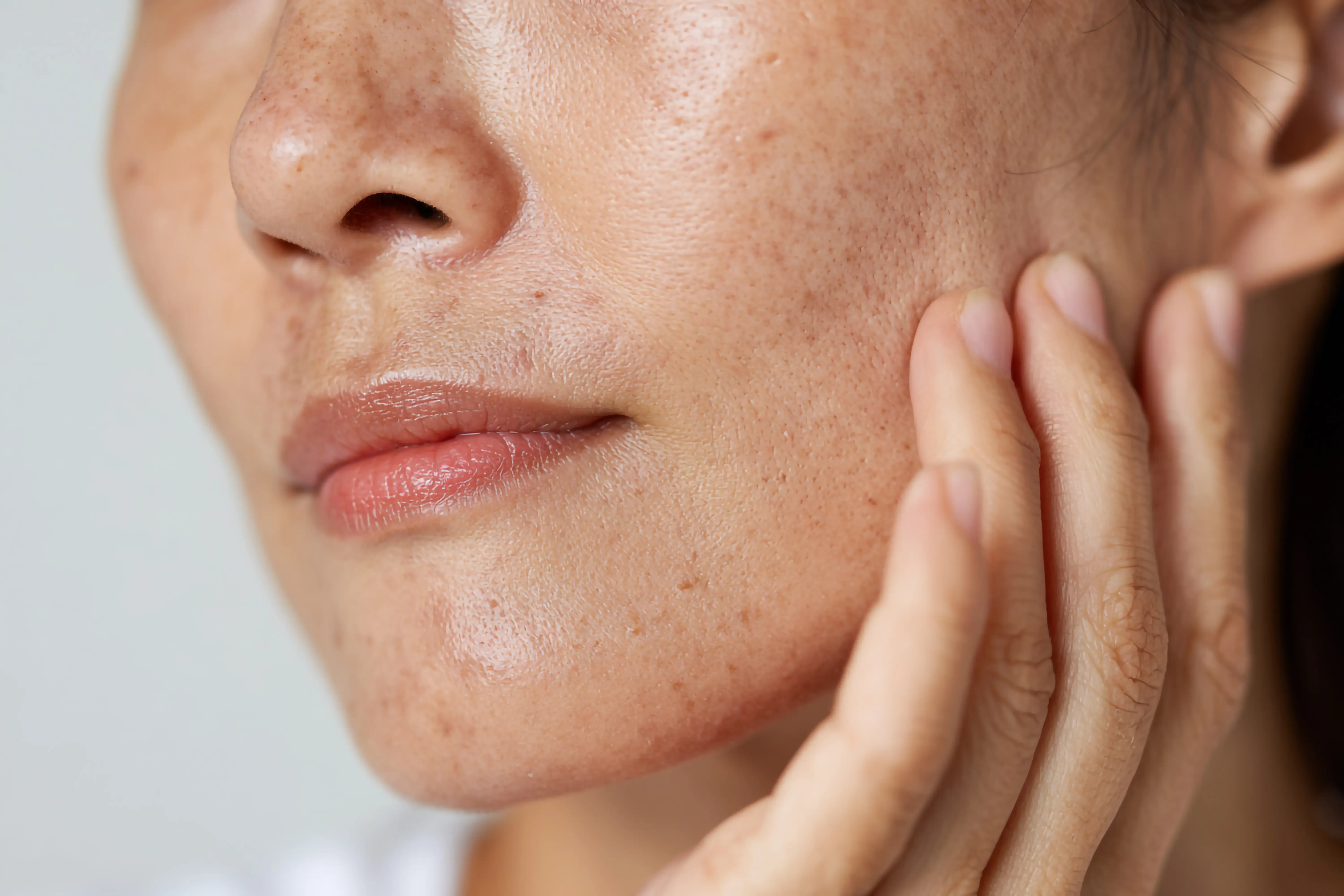

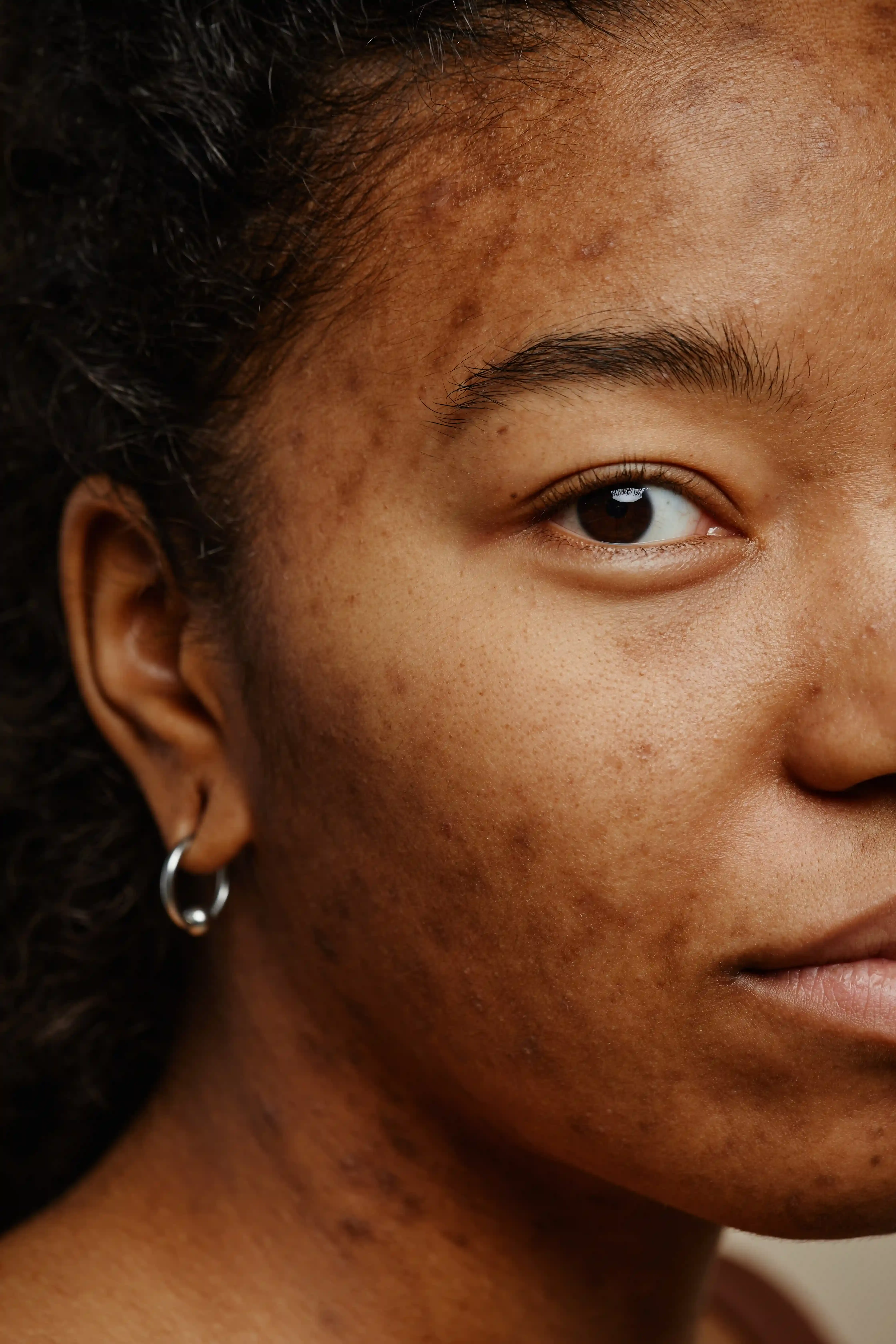
Hyperpigmentation develops when melanocytes (the cells that produce melanin) become overactive in response to internal or external triggers. The American Academy of Dermatology identifies four main types: melasma (hormonally driven, symmetric facial patches), sun-induced lentigines (age spots and sun spots), post-inflammatory hyperpigmentation or PIH (dark marks following acne, eczema, injury or a poorly chosen treatment), and drug-induced pigmentation (from certain antibiotics, antimalarials, chemotherapy agents and hormone therapies).
Common triggers we see at Pura Vida include cumulative UV and visible light exposure, hormonal fluctuations (pregnancy, oral contraceptives, perimenopause, thyroid disease), inflammation from acne or aggressive at-home products, friction or heat exposure, and genetic predisposition. Identifying the type and trigger is the first step in any successful treatment plan.