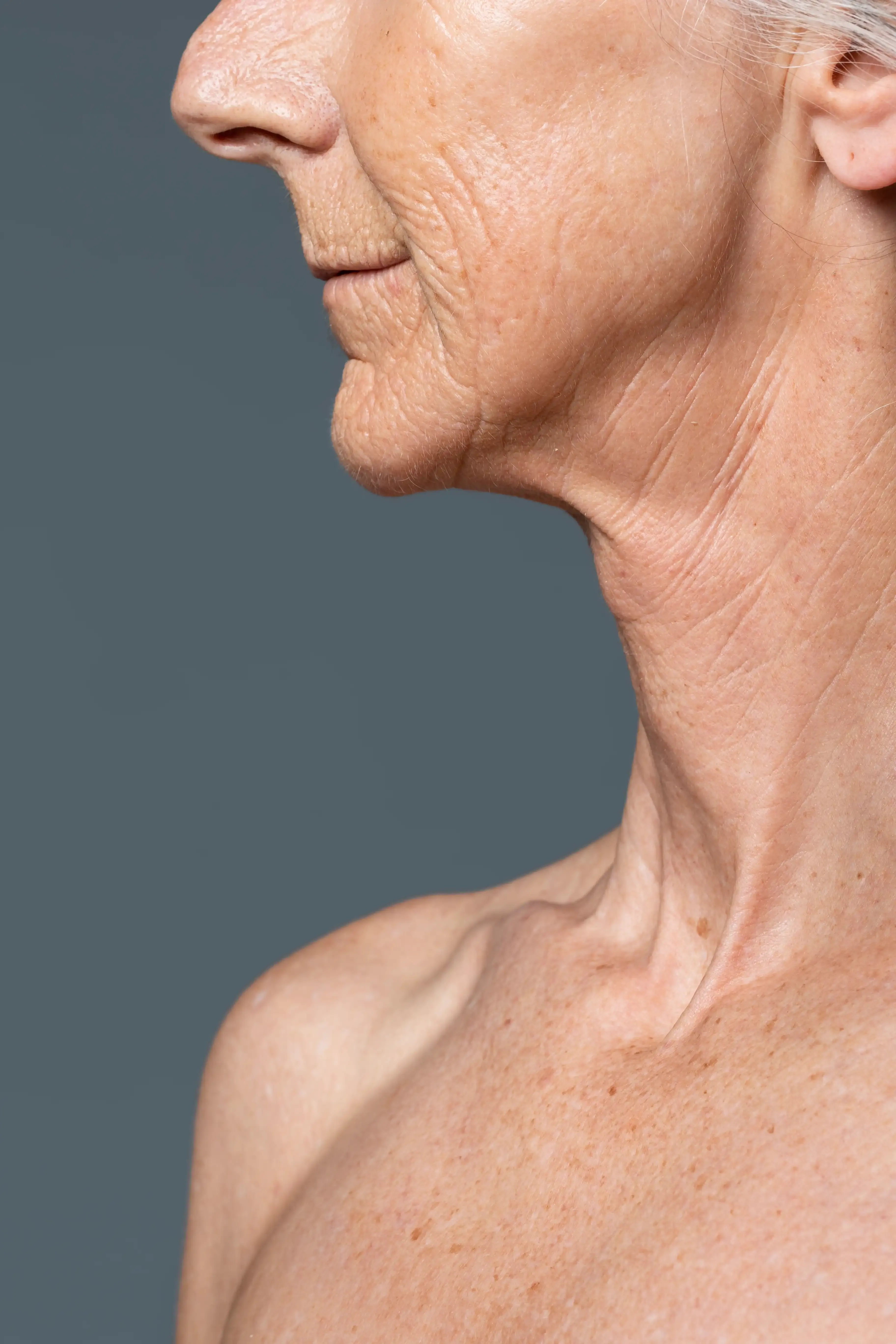

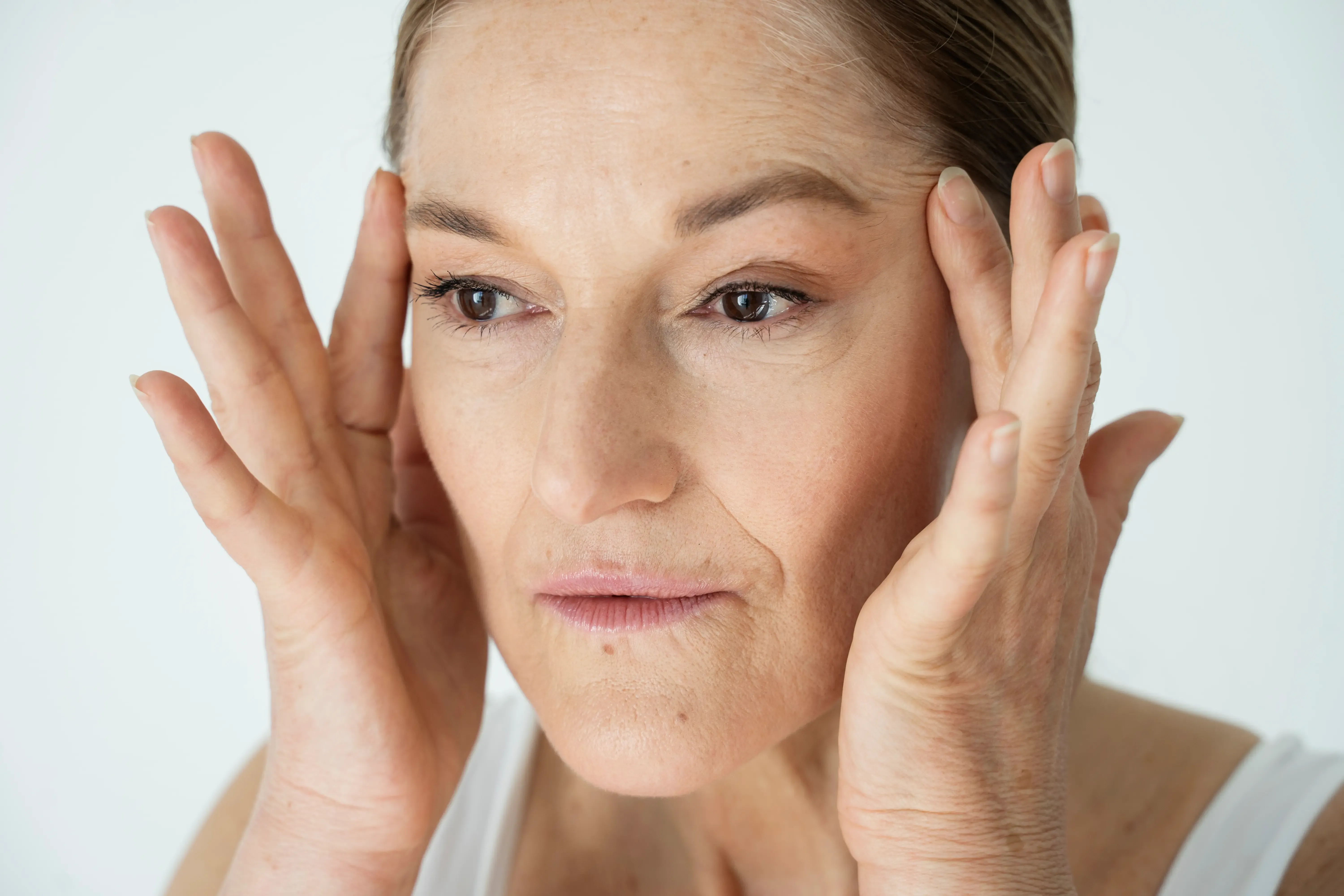


Sagging Skin develops through several overlapping processes. Collagen and elastin, the two proteins that give skin its firmness and bounce, decline at roughly one percent per year after the mid-twenties. Subcutaneous fat redistributes, with mid-face and cheek volume migrating downward and accumulating along the jawline and neck. The facial bones themselves resorb with age, reducing the structural scaffold that holds soft tissue in place.
External factors accelerate the process. Ultraviolet exposure is the leading driver of photoaging, breaking down dermal collagen and elastin and producing the loose, weathered appearance that the American Academy of Dermatology identifies as responsible for up to 90 percent of visible aging. Significant weight changes, smoking, repeated pregnancies, and genetic predisposition all influence how quickly Sagging Skin appears.