


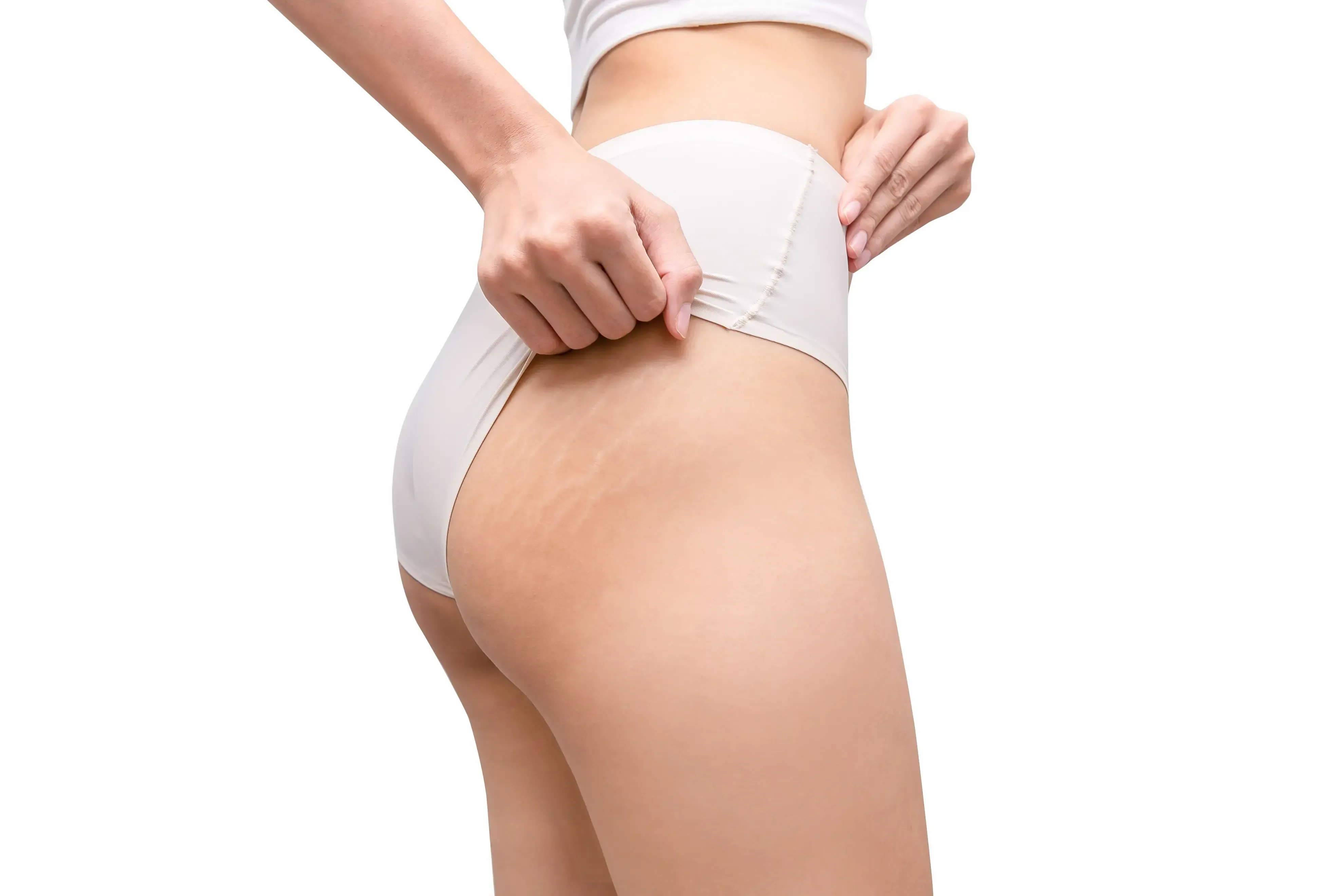
Stretch marks develop when rapid mechanical stretching of the skin damages the dermal collagen and elastin network. According to the National Institute of Arthritis and Musculoskeletal and Skin Diseases, the dermis can tear at the microscopic level when growth or weight change outpaces the skin's ability to remodel. Fibroblast activity is disrupted, pigment-producing cells (melanocytes) shift, and a scar-like band forms.
Stretch marks evolve in two stages. Striae rubrae are the early, red, or purple lines and are the most responsive to treatment. Striae albae are mature, silvery-white, and slightly depressed, and they respond more slowly because the dermal remodeling phase has largely ended. Our providers tailor the protocol to the stage of your striae.